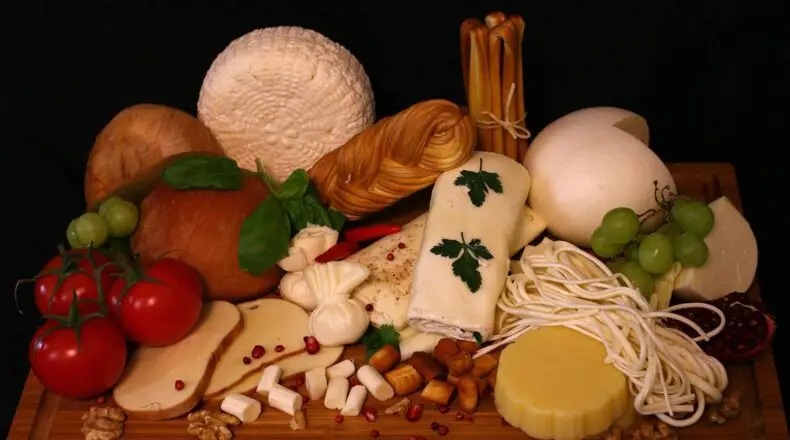
Georgia isn’t just famous for wine — it’s a paradise for cheese lovers, with over 60 types and more than 250 if you count local village varieties.
One of the oldest food traditions in the world, Georgian cheesemaking dates back at least 8,000 years — around the same time they began making wine.
On a Georgian supra (traditional feast), cheese is always on the table. It balances strong wine and spicy dishes — and in some villages, hosts would proudly show guests their own homemade cheese instead of bread.
N0w, let’s dive into Georgia’s most famous cheeses:
1) Sulguni — the stretchy, salty cheese
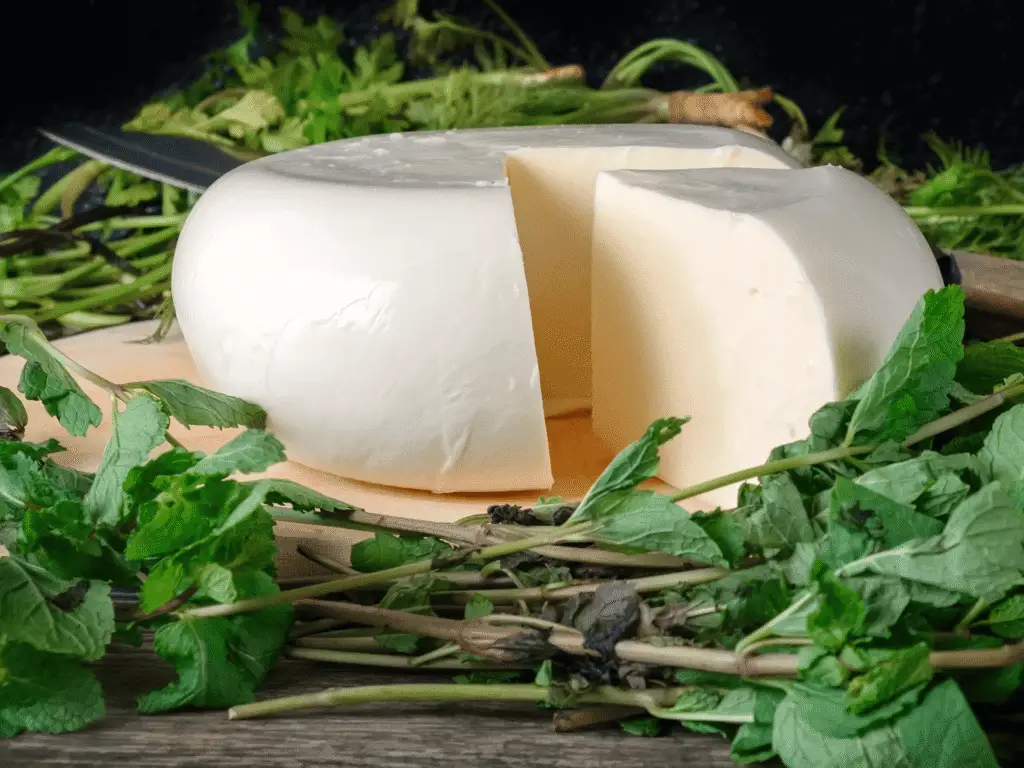
Geographic area of production: Samegrelo
Type of milk: Cow’s milk
Sulguni is a white, slightly salty, stretchy cheese. People call it like “Georgian mozzarella”,(pasta-filata style).
How they make Sulguni?
- Warm fresh milk.
- Add rennet or starter so milk becomes curd. Wait until it sets.
- Cut the curd and drain whey.
- Heat curd in hot water until it is soft and elastic.
- Pull and stretch the curd many times (this makes it stringy).
- Shape the cheese into rounds or braids.
- Put it in salt water (brine) to taste. Serve fresh or lightly smoked.
2) Imeruli (Imeretian cheese) — the everyday cheese
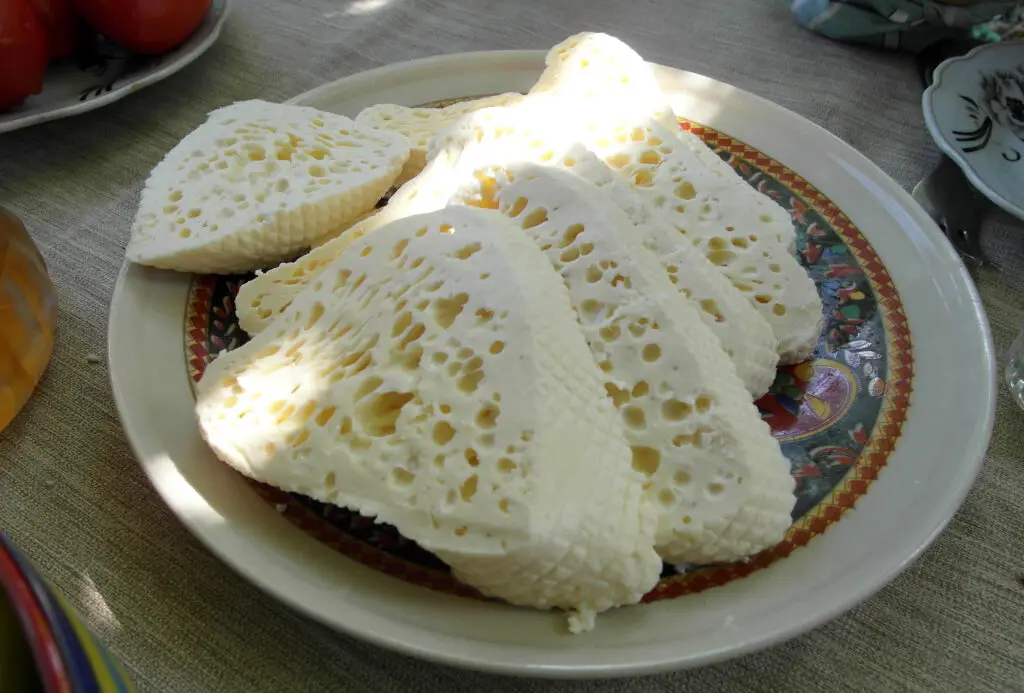
Geographic area of production: Imereti
Type of milk: Cow’s milk
Imeruli is a mild, fresh cheese which often matures in 1–2 days and is the base for other cheeses like Sulguni. Many families eat it daily.
How they make Imeruli?
- Heat milk to a warm temperature.
- Add rennet to make curd. Wait (about 30–45 min).
- Cut curd into small pieces to release whey.
- Drain the curds in a cheesecloth or mold. Turn the curd often.
- Press lightly so shape forms.
- Salt the cheese and leave to rest for a short time (1–2 days). Serve.
3) Tenili — the thin-stringed, delicate cheese
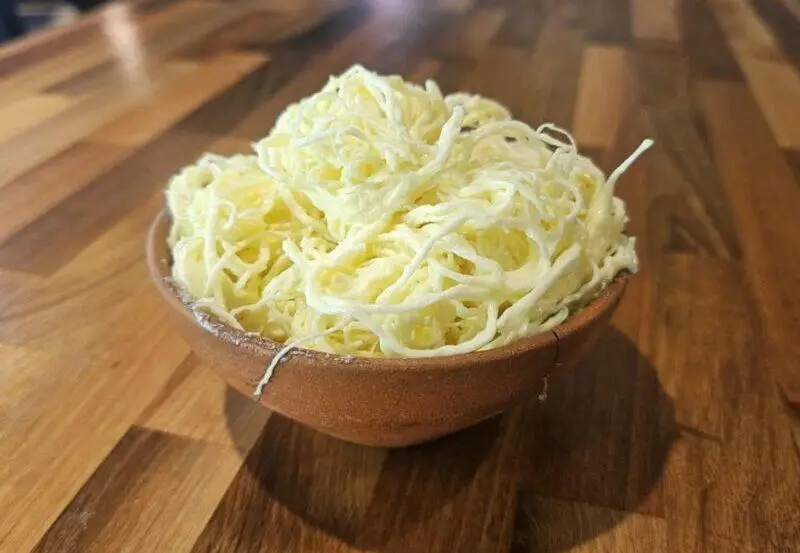
Geographic area of production: Samtskhe–Javakheti
Type of milk: Sheep or cow milk
Tenili is famous for being pulled into very thin threads, almost like yarn. It comes from southern Georgia and is protected as a traditional product. Making Tenili is a special skill.Tenili’s unique skill — Tenili cheese is pulled into hair-thin threads by hand. Very few people know the skill, and UNESCO listed it as part of Georgia’s “Intangible Cultural Heritage.”
How they make Tenili?
- Use rich sheep or cow milk.
- Make curd, then heat and knead until curds become soft and stretchy.
- Hand-pull the warm curd into very thin threads.
- Fold threads into bundles and soak them in salty cream or water.
- Dry the bundles a little — then store or eat. The threads give Tenili a silky texture.
4) Guda (Tushetian Guda) — the mountain cheese in a skin
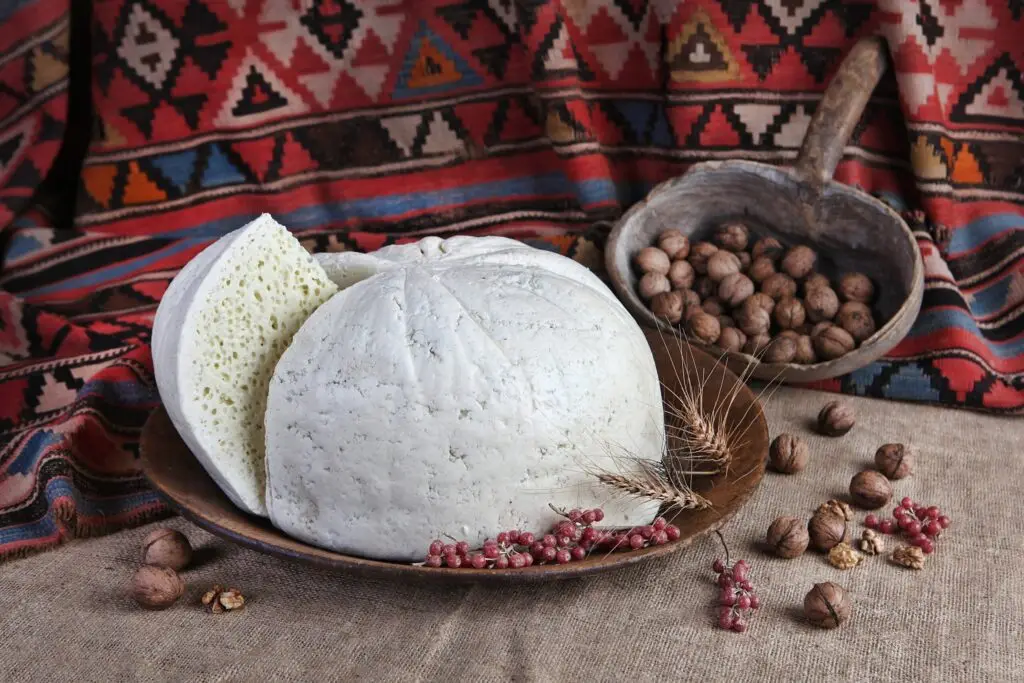
Geographic area of production: Tusheti
Type of milk: Sheep or mixed (sheep + cow)
Guda is aged inside a sheep-skin bag (a “guda”). This gives the cheese a strong, earthy flavor. It is made in mountain areas like Tusheti and usually needs long ripening (60+ days). Guda’s skin secret — Traditional Tushetian Guda cheese was matured inside a cleaned sheep’s stomach (a guda). The skin gave it a strong, earthy taste and protected it during mountain storage.
How they make Guda?
- Use fresh whole milk (sheep, or mix sheep + cow).
- Make curd with rennet and drain whey.
- Press curd into cloth to make a firm cheese.
- Put the cheese into a cleaned sheepskin bag (the “guda”).
- Add salt and press. Hang or store the bag to mature for weeks or months. The skin helps flavor and preserve the cheese. oriGIn+1
5) Dambalkhacho — an old, local specialty
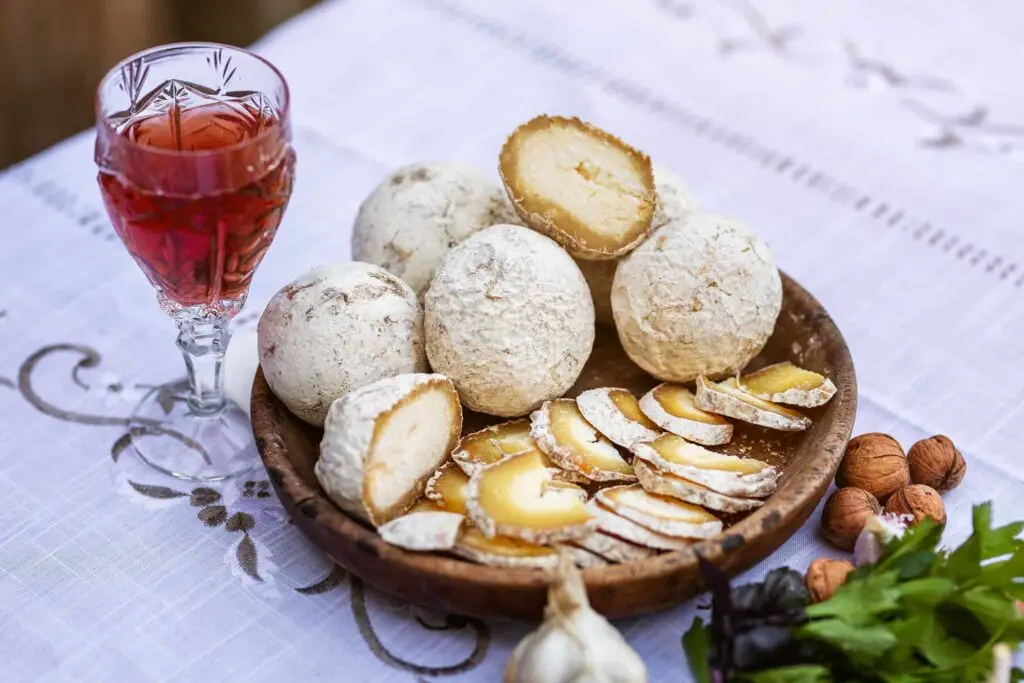
Geographic area of production: Pshavi, Tianeti
Type of milk: made with buttermilk, using cow’s milk
Dambalkhacho is a rare, local cheese from highland regions (Pshavi, Tianeti). It is made from whey by special heating and drying steps and then aged — it has a sharp, strong taste. It is registered as a local product. Dambalkhacho — a “moldy treasure” — This rare highland cheese is one of the few naturally mold-ripened cheeses in the Caucasus, similar in some ways to Roquefort or Gorgonzola, but made by shepherds in clay jars.
Dambalkhacho is consumed as dry, it is also sometimes added to Khinkali, Khachapuri and a traditional Pshavi dish – Khachoerbo, during the preparation of which it is heated with a large amount of clarified butter and a little bit of garlic. Dambalkhacho pairs well with Zhipitauri (a traditional high-alcoholic drink common in the mountains of Georgia), as well as with dry white wine and beer.
How they make Dambalkhacho?
- Start with the whey (left after making cottage cheese).
- Heat the whey to remove albumin and thicken it.
- Collect the heated mass (it becomes a dense curd).
- Form small balls or shapes and dry them.
- Age the dried pieces in jars or on shelves until they develop the traditional taste.
6) Chechil (string cheese) — the braided, salty snack
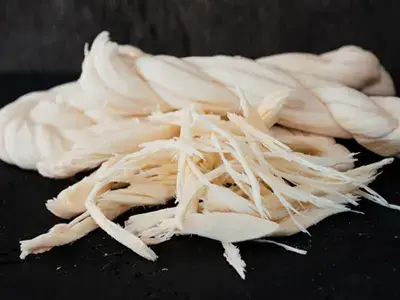
- Geographic area of production: Samtskhe-Javakheti
- Type of milk: made fromskimmed cow’s milk
Chechil (chechili) is a braided, salty string cheese. It is common in Georgia and nearby countries. It is often smoked and eaten with beer or as a snack.
How they make Chechil — simple steps
- Make a mozzarella-like curd.
- Heat and stretch the curd into long strings.
- Twist or braid the strings into ropes or figure-eight shapes.
- Brine and sometimes lightly smoke the ropes. Store in jars or eat fresh.
Georgia has many lesser-known but fascinating cheeses. Here are some of them:
Chogi
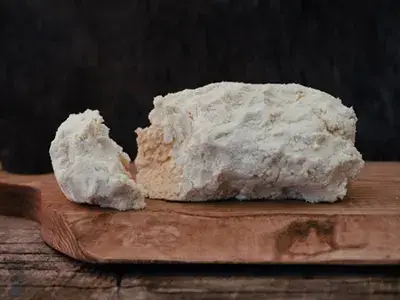
Chogi is a cousin of the famous Sulguni, but with a stronger personality. Made in Samegrelo, this cheese goes through a longer maturing process, which deepens its flavor and gives it a sharper edge. Traditionally, shepherds would store it in clay pots or even inside sheep- or goatskin bags, which added a rustic aroma. Today, Chogi is less common than Sulguni, but those who taste it often describe it as the “spicier brother” of Georgia’s most famous cheese.
Tskaldaskhmula Cheese
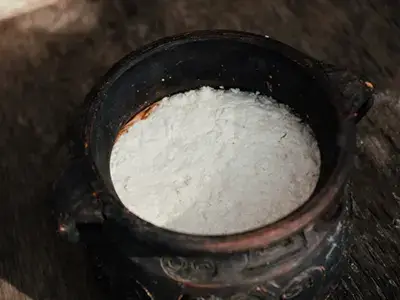
- Geographic area of production: Racha-Lechkhumi
- Type of milk: made with cow’s milk
Sweet and sour, spicy tones of this cheese from plantations make the famous Khachapuri of Ghebi unique and unlike all other Khachapuri. For reference, Ghebi’s Khachapuri core consists of several kinds of cheese, so it is quite, different from the Khachapuri flavors prevalent in other regions of Georgia.
Kobi Cheese
High in the Kazbegi region lies the village of Kobi, where a lesser-known cheese carries the village’s name. Kobi cheese is semi-hard and is said to have a subtle smokiness, a flavor it often gains from being aged in the cool, natural caves of the mountains. The crisp mountain air helps preserve it, and locals say it tastes of the highlands themselves — pure, fresh, and slightly wild.
Chkinti-Kveli
Chkinti-Kveli, literally “dried cheese,” is made in eastern Georgia and shows a practical side of traditional cheesemaking. Fresh curds are dried in the sun until they harden, turning into a crumbly texture. This allows the cheese to be stored for long periods, especially important in regions where fresh milk was not always available year-round. The dried pieces can be grated over dishes or eaten as a snack, adding tangy richness to meals.
Khmeli (dry) Kalti
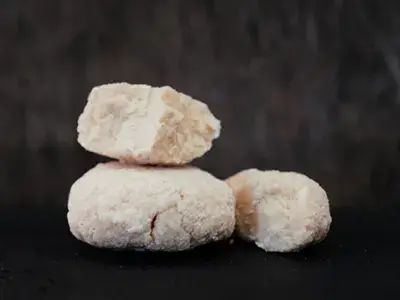
- Geographic area of production: Tusheti
- Type of milk: made with the whey of cow’s or sheep’s milk or mixture of the two
Kalti is usually served with the traditional local drink Aludi (beer).
In the mountainous areas of Svaneti and beyond, shepherds prepare Kalti — small dried balls of cheese made from pressed curds. Shaped and left to dry, they are stored for months and used during the long, snowy winters when fresh milk is scarce. Kalti may look humble, but it represents survival and tradition, sustaining families through the hardest times while also being a tasty and nutritious food.
Svanetian Cheese
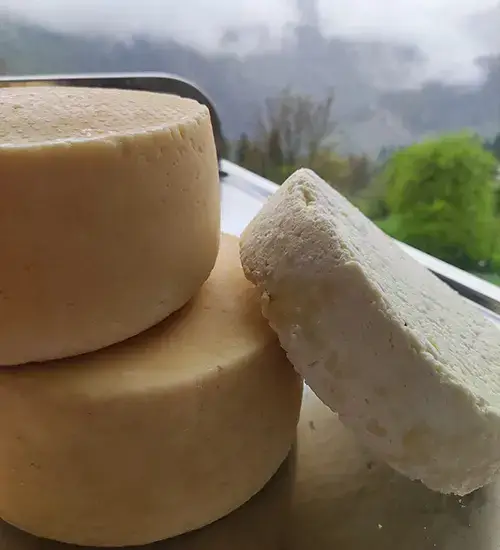
Cheese in Svaneti is famous for its saltiness, which makes it last longer in harsh mountain conditions. It is usually made from cow’s milk and has a firm, brined texture. Often paired with Svanetian salt — a special mix of local spices and herbs — this cheese becomes part of the region’s unique food culture. It is simple, strong, and perfectly adapted to the mountain lifestyle.